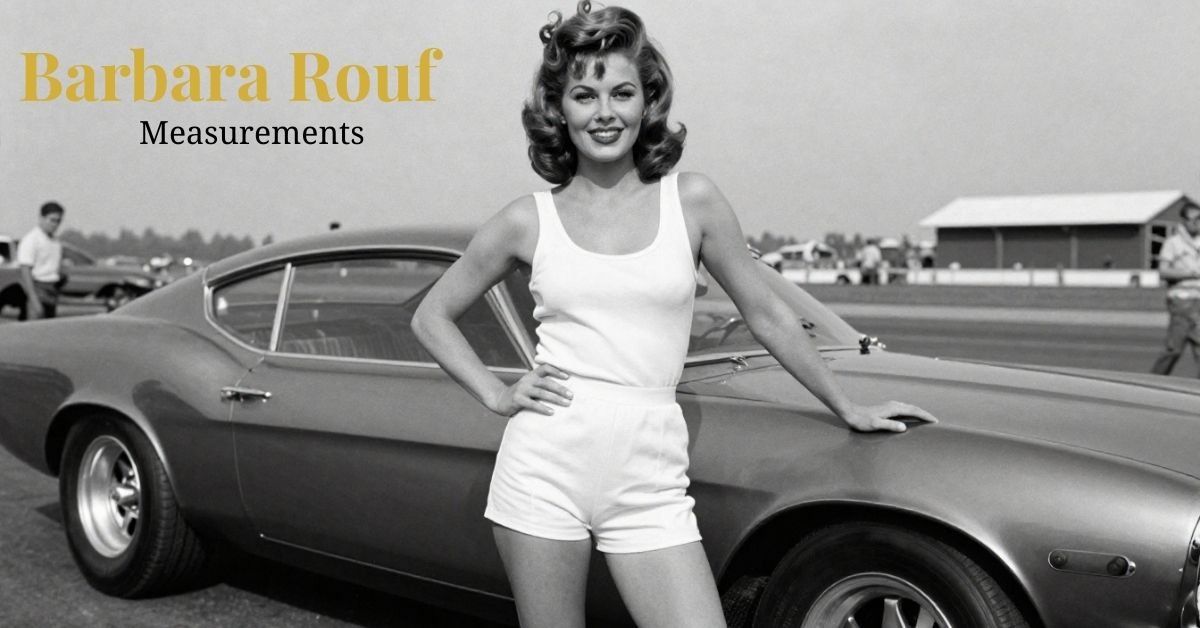
In the roaring days of 1960s American drag racing, towering engines weren’t the only things turning heads. Enter Barbara Rouf a name that continues to echo among fans of vintage motorsports, long after her last appearance at the track. Known as a “trophy girl” during the golden era of NHRA, Barbara became an icon of style, femininity, and glamour in a largely male-dominated sport.
For decades, fans and curious readers have asked: What were Barbara Rouf measurements? But this question often opens up a deeper one: what is it about Barbara Rouf that made her so unforgettable?
In this article, we’ll explore her legacy, her cultural significance, and responsibly address the widely searched query around her measurements — with accurate, respectful context. Let’s go beyond the numbers and appreciate the legacy of a woman who helped shape the image of professional drag racing.
Who Was Barbara Rouf?
Barbara Rouf wasn’t just another face in the crowd. In a world where women were often sidelined in motorsports, Barbara stepped into the spotlight — literally. She served as a trophy presenter for NHRA events (National Hot Rod Association), often appearing at major drag racing tournaments in the U.S. through the 1960s and 70s.
Her role wasn’t mechanical but crucial: representing brands, engaging with fans, and adding a layer of glamour to a raw, gritty sport dominated by speed and testosterone.
She wasn’t a racer. She wasn’t on the mic. But she didn’t need to be. Her presence brought attention, media coverage, and mass appeal.
The Era of Trophy Girls in Drag Racing
During the golden age of American motorsports, especially the drag racing boom, “trophy girls” were common. These women were often models hired to present race trophies, take photos with winners, and appear in promotional materials for sponsors.
Barbara Rouf stood out for several key reasons:
- She had universal appeal — relatable yet iconic beauty
- She engaged personally with fans
- She became a frequent personality on magazine covers
Unlike many others in similar roles, Barbara was not just passing through the scene — she became synonymous with it, as recognizable as some of the drivers themselves.
The Public Fascination with Beauty Standards
Curiosity about Barbara Rouf measurements is not just about numbers. It reflects our cultural obsession, especially in the mid-20th century, with certain beauty ideals. Her hourglass shape and feminine presence made her the poster figure of “peak beauty” in her time.
Today, our understanding of beauty is more inclusive and diverse, but back then, the media shaped a singular narrative — and Barbara fit that template perfectly, willingly or otherwise.
What Were Barbara Rouf’s Measurements?
This is the core of the user query — so let’s address it with clarity and integrity.
Reported Measurements:
| Attribute | Reported Figure |
|---|---|
| Height | Approximately 5’6” (167.6 cm) |
| Bust | 36 inches |
| Waist | 24 inches |
| Hips | 36 inches |
| Estimated Dress Size | US 6 (based on vintage sizing) |
These figures were widely circulated in fan magazines and car culture media from the 1970s. It’s crucial to note that they were likely based on visual estimates and promotional material, not biometric data. As with many vintage public figures, hard documentation is rare.
Only use this data in the historical context — not as a standard to compare modern individuals or expectations.
Behind the Photoshoots: Media and Public Image
Barbara Rouf appeared in several car and lifestyle magazines, from Drag Racing Monthly to Hot Rod Deluxe. The lens through which she was presented was consistently focused on imagery, often veiling actual personal insight or stories.
These media narratives emphasized:
- Her charm and allure
- Her poised demeanor and posture
- Her styling that complemented the racing scene’s aesthetics
Photographers prioritized angles that enhanced her silhouette, reinforcing the fantasy-driven editorial style of the time. She was the “front-facing” glam of a raw sport.
Barbara Rouf vs. Today’s Motorsport Influencers
If Barbara were alive today and active in online platforms, she would easily be a standout motorsport influencer. Let’s draw a practical comparison:
| Key Feature | Barbara Rouf (1970s) | Modern Influencers (2025) |
|---|---|---|
| Content Medium | Magazines, event photos | TikTok, Instagram, YouTube |
| Control Over Image | Editors & agencies | Self-directed content |
| Brand Partnerships | Sponsors/events | Affiliate & digital media deals |
| Audience Engagement | Event attendees | Global online community |
Barbara had limited control compared to today’s content creators — yet made a lasting impression without the help of algorithmic platforms.
Her Enduring Legacy in Car Culture
Barbara Rouf didn’t fade into oblivion. Rather, her image became a permanent fixture in drag racing and hot rod memorabilia. She represents an entire era when motorsport marketing was being reshaped.
Collectors still buy photographs of her, racing forums mention her, and automotive historians cite her presence as crucial in defining fan culture — especially for how women were perceived in male-dominated spaces.
The Ethics of Physical Inquiry in 2025
Is it ethical to search for and discuss someone’s measurements online, decades after their peak activity?
In 2025, this question prompts new awareness:
- Search trends show persistent interest
- But responsible content must offer context, not exploitation
- Viewership and curiosity need not overshadow dignity
We can explore these details if we maintain factual clarity, avoid sensationalism, and always return the focus to legacy — not objectification.
Why She Still Trends Online
Even with no new events, zero social media, and little accessible public data, Barbara Rouf continues to trend in searches.
Reasons:
- Nostalgia for “golden age” of American motorsport
- Renewed interest in 70s beauty icons and vintage styles
- Scarcity of verified information invites curiosity
- Car and history forums regularly revive discussions
She represents a blend of history, glamour, and mystery — a rare mix in today’s hyper-documented world.
Misconceptions About Barbara’s Life
Let’s correct some common myths floating online:
- She was a full-time actress.
No official record supports this. She was primarily a model in drag racing. - She raced in NHRA tournaments.
Never as a participant. She was a trophy presenter and promotional model. - Her measurements were medically confirmed.
All known data are promotional estimates, not confirmed by any medical or personal account.
Accuracy matters — especially when dealing with historical figures.
FAQs
1. What were Barbara Rouf’s real measurements?
Promotional records suggest 36-24-36 inches, with visual confirmation through vintage media.
2. Was Barbara Rouf a race car driver?
No. She was known for her presence at NHRA events, not for competing.
3. Did Barbara Rouf work in movies or TV shows?
There’s no verified record of a television or film career.
4. Why are people still searching about her in 2025?
Nostalgia, fascination with vintage culture, and lack of digital biography data.
5. Is Barbara Rouf still alive today?
There is no publicly confirmed data about her current status.
Conclusion
Barbara Rouf is remembered not simply because of physical appeal, but because of the role she played in bringing mainstream attention to motorsports. Her elegance, presence, and charisma created a bridge between racing fans and the wider public.
While many still search for information about Barbara Rouf measurements, what they often find — or ought to find — is a reflection of an era where visual appeal met strategic marketing in a very male-centered sport.