Language doesn’t just define our communication—it organizes how we feel, share, and belong. In a world shaped by self-expression, introspection, and digital emotion, jememôtre has emerged as a powerful yet often misunderstood term. Trending among Gen Z, wellness influencers, and creative thinkers, this word invites deep inquiry.
But what does jememôtre really mean, and how is it shaping the way we record our inner world?
Here’s a comprehensive guide—far beyond speculation—into the meaning, use, and impact of in 2025 and beyond.
Jememôtre Defined: What Does It Really Mean?
While unofficial and mostly used online, jememôtre can loosely be defined as:
“The intentional act of self-measuring one’s emotional or existential state.”
It’s not emotional disclosure—it’s quiet introspection, often made public through journaling, vlogging, or digital storytelling.
Notably, the word embodies the digital and cerebral fusion of:
- Self-perception
- Emotional awareness
- Symbolic expression
Origins of the Word: Fictional or Functional?
Jememôtre isn’t recognized in traditional dictionaries (yet). But its construction from French-like roots makes it feel authentic:
| Part | Possible Origin | Meaning |
|---|---|---|
| Je me | French | I, myself |
| môtre | Blended word | Possibly from “montrer” (to show) or “mètre” (to measure) |
It’s a phonetic hybrid—reflecting how real language often evolves in internet-native communities: fast, unconstrained, and poetic.
Why Jememôtre Reflects 2025’s Culture Shift
As emotional intelligence becomes central to education, therapy, and creative expression, words like jememôtre create space for emotional nuance.
In 2025, this term aligns with:
- AI-assisted journaling apps
- Emotion-coded productivity templates
- “Self-storytelling” YouTube content
- Lo-fi, identity-driven playlists titled with abstract moods
It reflects this collective digital intimacy: the world of curated but complex self-personas.
Jememôtre vs. Emotional Labeling: What’s Different?
Traditional self-labeling uses static terms (e.g., happy, sad), whereas jememôtre captures the fluidity of feeling over time.
| Feature | Emotional Labeling | Jememôtre-Based Reflection |
|---|---|---|
| Fixed or Evolving | Fixed | Evolving/fluid |
| Rooted in Psychology | Yes | Rooted in language/culture |
| Used for Diagnosis | Sometimes | Never |
| Expressive Mediums | Verbal only | Visual, poetic, symbolic |
Social Media and Jememôtre: Aesthetic Meets Emotion
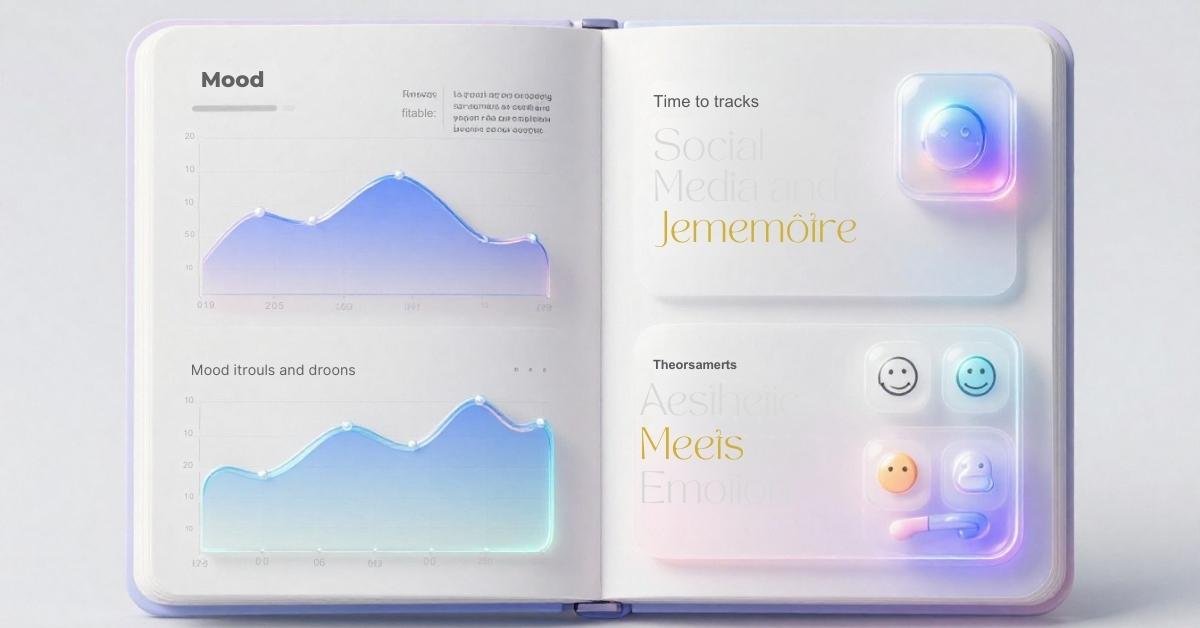
Now appears in captions and hashtags tied to:
- Slow-living vlogs: “#jememôtre morning”
- Mood boards: color-coded emotional maps
- Daily planners: check-in columns labeled Moment
- TikTok or YouTube openers: “A soft day, a journal, and tea…”
This aesthetic expression is not just performative—it’s collective emotional documentation, viewed through an artistic lens.
Who Uses Jememôtre? Groups, Movements, and Voices
This term has spread organically. It resonates most with:
- University writing students (creative identity projects)
- Mental health advocates on Threads, Discord, Reddit
- Solo travelers, Gen Z memoirists
- Slow productivity and wellness creators
These users share one trait: using everyday routines to self-define without hard labels.
How Is It Interpreted Globally?
While it originated online, it has been explored and reinterpreted in various cultural spaces:
| Region | Interpretation Style |
|---|---|
| 🇫🇷 France | Eye-rolls from purists, interest from linguists |
| 🇯🇵 Japan | Compared to “ikigai” and reflective journaling |
| 🇧🇷 Brazil | Included in indie art galleries’ digital corners |
| 🇺🇸 USA | Common in TikTok wellness trends |
It may not be academically accepted, but it’s socially and artistically respected.
Future of Language: Jememôtre and Other Identity Words
We’re entering a generation of mindful language loops—words that describe transitory mental states.
Alongside, similar emerging terms include:
| Word | Meaning Snapshot |
|---|---|
| Kintsurē | Metaphorical emotional repair |
| Lumathé | Digital pause for clarity |
| Jememôtre | Identity-based self-check moment |
These evoke emotion, depth, and a reason to pause—cornerstones of 2025 communication.
Should You Use It? Word Ethics 101
Anyone can use this word , but it’s essential to approach it sensitively:
- Avoid using it for buzz or clout
- Don’t mock it—it’s meaningful to many
- Use it when journaling, reflecting, or going inward
It’s equal parts language, mirror, and mantra.
Final Thought: Words Evolve When We Evolve
Whether jememôtre becomes an Oxford-recognized word or fades into digital folklore, it has already left a mark. It offered vocabulary for something soft, vulnerable, and beautiful—checking in with one’s evolving self.
FAQs
Q1: How do you pronounce jememôtre?
Roughly: zheuh-meh-MO-truh
Q2: Is jememôtre a real French word?
No, it mimics French structure but is an invented cultural term.
Q3: Can I use jememôtre in writing?
Yes—especially in blogs, journaling, or reflective posts.
Q4: What does jememôtre mean in practical terms?
A moment of personal, emotional, or identity-based self-check.
Q5: Where did this word trend first?
Social media — especially TikTok, Threads, and emotion-tracking platforms.
Conclusion
It may not technically exist in dictionaries, but it lives in us—as a word, a reflection, a symbol. It serves as a gentle vocabulary for emotional growth, emerging organically from the internet’s most human corners.