Introduction
If you’ve ever spotted Foenegriek on a spice jar or supplement label and wondered what it actually does, you’re in the right place. This aromatic seed and leaf from Trigonella foenum-graecum bridges traditional kitchens and modern wellness, showing promise for digestion, post‑meal blood sugar, breastfeeding comfort, and more. In 2025, interest keeps growing—but results depend on dose, timing, product quality, and your overall diet and routine. Not every claim is equally backed by evidence, and some users do better with culinary use while others prefer standardized extracts.
This long-form guide translates the latest, practical know‑how into clear steps you can use today. You’ll learn what it is, how it works, who should be cautious, and how to choose and dose the right format—from seeds and teas to modern extracts. You’ll also get visual quick‑guides, a two‑week starter plan, and credible resources to go deeper. Use this as an evidence‑aware, real‑world roadmap—and check with your clinician before adding any new supplement.
What It Is and Why It’s Everywhere in 2025
Fenugreek is a hardy annual herb in the pea family whose seeds and leaves have been used for centuries across South Asian, Middle Eastern, and North African cuisines. You’ll also see it called methi, and in some regions you may encounter the spelling Foenegriek on packaging or recipes. The seeds carry a maple‑like aroma with a pleasantly bitter edge; the leaves are more delicate and herbaceous.
Culinary use is the easiest on‑ramp: temper a pinch of ground seed in hot oil to perfume an entire pot of lentils or vegetables. Beyond the kitchen, standardized extracts appear in products for glycemic support, digestion, and men’s vitality. As of 2025, the science supports some uses more than others; realistic expectations and consistent routines make the difference between “interesting” and “useful.”
One‑sentence definition for quick reference: Fenugreek is the seed and leaf of Trigonella foenum‑graecum, rich in soluble fiber (galactomannan), saponins, and an unusual amino acid (4‑hydroxyisoleucine) that together may support digestion and post‑meal glucose control.
Benefits Backed by Research: What to Expect (and What Not To)
The evidence base is mixed but maturing. Effects are most consistent when fenugreek is used with meals and as part of broader diet and lifestyle changes.
- Post‑meal glucose support: Soluble fibers slow gastric emptying and carbohydrate absorption, while 4‑hydroxyisoleucine may support insulin response. Small randomized trials have shown modest reductions in post‑prandial spikes, especially with consistent, meal‑timed use.
- Digestive comfort and satiety: The fiber matrix can support regularity and a feeling of fullness. Culinary doses often improve tolerance versus large supplement doses.
- Blood lipids: Some studies report small reductions in total and LDL cholesterol; effect sizes are modest and not a substitute for prescribed care.
- Lactation comfort and perceived supply: Traditional use is widespread; controlled studies are mixed. Many lactating parents report subjective improvements; clinical outcomes vary.
- Training and vitality: Results depend on product standardization and are inconsistent across brands.
Evidence snapshot (2025)
| Outcome | Evidence quality (overall) | What users most often report |
|---|---|---|
| Post‑meal glucose control | Moderate, mixed results | Smoother after‑meal readings over weeks |
| Digestive comfort/satiety | Moderate, practice‑based | Less bloating; fuller after meals |
| Total/LDL cholesterol | Low–moderate, small effect | Modest change with diet improvements |
| Lactation comfort/perceived supply | Mixed, low–moderate | Some notice benefit; others do not |
| Training/libido claims | Low, brand‑specific | Variable; GI tolerance is a limiter |
How It Works in the Body: Fibers, Saponins, and Key Actives
Understanding the “why” helps you use it better.
- Soluble fibers (galactomannan): Form a gel that slows gastric emptying and carbohydrate absorption, blunting post‑meal glucose spikes and improving satiety. This is strongest when seeds are eaten with meals and plenty of water.
- 4‑Hydroxyisoleucine: An unusual amino acid that can enhance glucose‑stimulated insulin secretion in lab models. Human impact depends on dose, timing, and extract quality.
- Saponins (e.g., diosgenin, protodioscin): May influence cholesterol metabolism and certain hormonal pathways; human outcomes vary widely.
- Bitter and aromatic compounds: Support digestive juices and appetite regulation; too much can taste harsh unless balanced in recipes.
Context matters. A teaspoon of ground seed folded into lunch behaves differently than a concentrated capsule on an empty stomach. Food matrix, fluid intake, and consistency across weeks often determine whether you notice benefits.
Safety First: Side Effects, Interactions, and Who Should Avoid It
Culinary amounts are generally well tolerated. Concentrated supplements raise additional considerations. Introduce gradually and pair with meals.
Common, usually mild effects
- Temporary gas, fullness, or loose stools (especially if you ramp fiber too fast)
- A maple‑like body odor in some people
- Bitterness if overused or not tempered in recipes
Who should be cautious
- People using insulin or oral diabetes medications
- Anyone on anticoagulants/antiplatelets (e.g., warfarin)
- Those with known legume/peanut allergies
- Pregnant individuals (avoid high‑dose supplements; culinary use in food is typically acceptable)
- Anyone scheduled for surgery (stop supplements in advance per medical advice)
Quick interaction matrix
| Situation/Medication | Potential issue | Practical guidance |
|---|---|---|
| Insulin or oral hypoglycemics | Additive glucose‑lowering | Monitor closely; discuss adjustments with clinician |
| Warfarin/antiplatelets | Possible bleeding/INR changes | Do not self‑start; seek medical supervision |
| Antihypertensives | Minor additive BP lowering (varies) | Track BP; report dizziness |
| Pregnancy | Safety of high doses uncertain | Culinary only; avoid supplements |
| Severe legume/peanut allergy | Cross‑reactivity possible | Avoid; have an emergency plan |
Stop and seek care if you experience rash, wheezing, swelling, or signs of low blood sugar (shakiness, sweating, confusion).
Dosing That Makes Sense: Seeds, Teas, Powders, and Extracts
There’s no official RDA. Start low, go slow, and take with meals. Hydration matters with fiber‑rich seeds and powders.
Common use patterns (follow product labels and your clinician’s guidance)
- Culinary seed use: Toast lightly, then grind and fold into meals. A pinch to ½ teaspoon per meal is a practical culinary range.
- Tea/infusion: Crush ½–1 teaspoon of seeds, steep 10–15 minutes; sip with meals.
- Standardized extracts: Choose third‑party‑tested products specifying seed extract and standardization of actives (e.g., saponins). Take with a main meal for best GI tolerance.
- Powders in smoothies/yogurt: Start with ¼ teaspoon and increase as tolerated; drink extra water.
Format and dosing at a glance
| Format | Typical context | Practical range (not medical advice) | Pros | Watch‑outs |
|---|---|---|---|---|
| Whole/ground seeds | Cooking; digestion/glycemia support | Pinch to ½ tsp per meal, 1–2 meals/day | Food‑first, affordable, fiber‑rich | Bitterness; gas if increased too quickly |
| Tea/infusion | Gentle intro; hydration + fiber | 1–2 cups/day with meals | Easy to tolerate; simple routine | Milder potency; seed quality matters |
| Standardized extract | Targeted support | Per label (often 1–2 servings/day) | Consistent dosing; convenient | Product variability; check certifications |
| Leaf (methi) | Everyday cooking | Handful/pinch in dishes | Pleasant flavor; low bitterness | Not equivalent to seed/extract in studies |
Everyday Cooking: Big Flavor, Less Bitterness
Kitchen use often delivers the best tolerability with meaningful fiber.
- Temper and toast: Heat whole seeds in a dry pan until aromatic, then grind. Gentle toasting tames bitterness.
- Balance with acid and fat: Lemon, tomato, yogurt, or tamarind plus a bit of oil/ghee smooth the edges.
- Use leaves for subtlety: Fresh or dried methi adds aroma without the assertive seed bite.
Quick ideas
- Lentil stew upgrade: Temper mustard seed, cumin, and a pinch of ground fenugreek in oil; stir through red lentils with spinach and lemon.
- Spiced yogurt dip: Mix ground seed with yogurt, cucumber, mint, and salt.
- Sheet‑pan vegetables: Toss cauliflower with coriander, paprika, garlic, brown sugar, and a light sprinkle of ground seed before roasting.
Visual ideas with credits
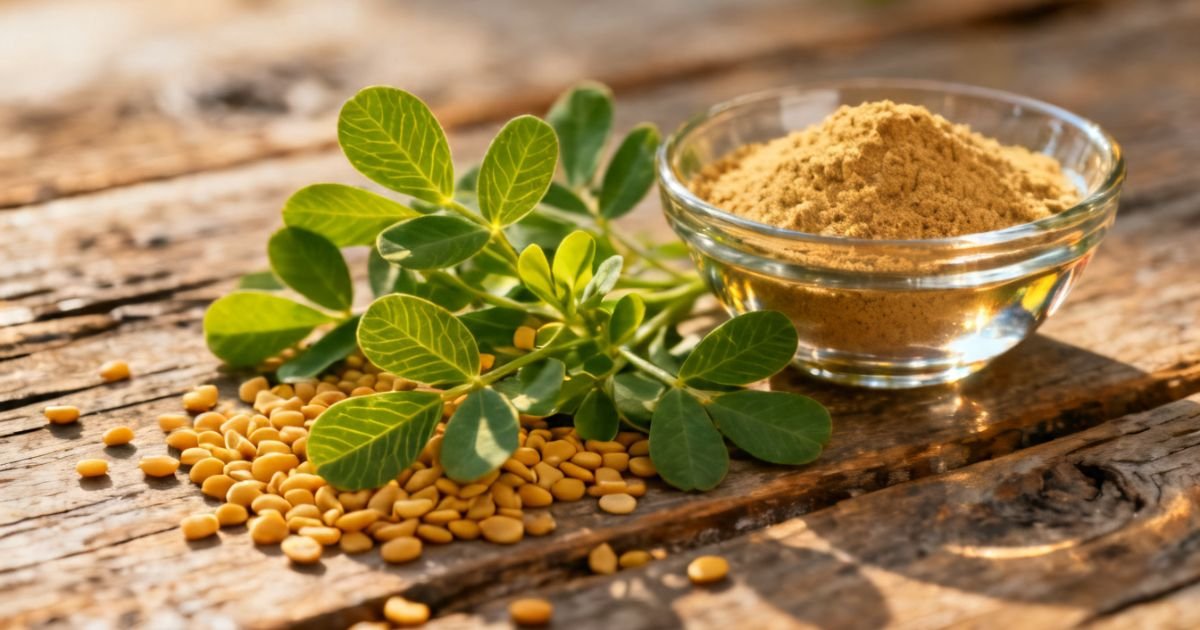
- Close‑up of seeds and leaves on a wooden board (credit: Unsplash, food photographer).
- Step sequence: toasting → grinding → tempering (credit: your in‑house team or licensed stock).
Goal-Based Use: Blood Sugar, Lactation Comfort, and Training Support
- Blood sugar and weight: Pair seed or extract use with lower‑GI meals, adequate protein, and daily movement. Consistency over weeks matters more than any single dose.
- Lactation comfort: Some lactating parents report perceived supply changes, but evidence is mixed. Work with a lactation consultant; monitor your infant for GI fussiness and stop if needed.
- Training and vitality: Some standardized extracts target libido or performance; results are brand‑specific and inconsistent. Track your own markers (energy, recovery, training logs) and GI tolerance.
Expectation setting
- What happens first: Digestive comfort may improve in days; post‑meal readings may shift in 1–3 weeks with meal‑timed use.
- When to pause: If you see no benefit after 4–6 weeks of consistent, well‑tolerated use—or you get side effects—reassess with a professional.
Quality and Buying Guide: Labels, Testing, and Storage
Supplements and spices vary in purity, potency, and freshness. When you see Foenegriek on packaging, confirm the botanical and part of plant to avoid confusion.
Quality checklist
- Botanical clarity: Trigonella foenum‑graecum; seed vs. leaf specified.
- Third‑party testing: USP, NSF, Informed Choice/Sport, or equivalent on supplements.
- Transparent label: Serving size, standardization (if any), allergens, country of origin.
- Freshness for culinary seeds: Whole seeds smell sweet‑maple, not musty; whole forms last longer than pre‑ground.
Storage tips
- Spices: Airtight jar, cool and dark; whole seeds up to ~12 months; ground for a few months.
- Supplements: Original bottle, away from heat and humidity; respect expiry dates.
Red flags
- “Proprietary blends” without amounts.
- Disease‑treating claims.
- No lot number or testing information.
Myths vs. Facts: What Marketing Gets Wrong
- Myth: “It replaces diabetes medication.” Fact: At best it complements diet and medical care for select people; never change meds without clinician guidance.
- Myth: “More is better.” Fact: Larger doses increase GI side effects without guaranteeing better results. Consistency beats megadosing.
- Myth: “It always increases milk supply.” Fact: Experiences vary; professional lactation support is foundational.
- Myth: “All products work the same.” Fact: Seeds, teas, powders, and standardized extracts act differently; quality and timing with meals matter.
- Myth: “Natural means safe for everyone.” Fact: Interactions and allergies exist; pregnancy calls for extra caution.
A Practical Two‑Week Starter PlanIf you decide to test Foenegriek, use this gentle, structured approach. Adjust for your goals, meds, and tolerance, and consult your clinician if you take prescription drugs.
Week 1 (find your tolerance)
- Days 1–3: Add a small pinch (⅛–¼ tsp) of lightly toasted, ground seed to one main meal daily. Drink a full glass of water with the meal.
- Days 4–7: If tolerated, use up to ½ tsp across two meals daily. Note digestion, energy, and (if relevant) post‑meal glucose.
Week 2 (refine the routine)
- Option A (culinary‑first): Keep using seeds with 1–2 meals; consider 1 cup of seed tea with lunch.
- Option B (standardized extract): If you prefer capsules, choose a third‑party‑tested product; take with a main meal as directed on the label.
- End of week: Review your notes. If no clear benefit and/or side effects persist, pause and reassess.
Simple tracking checklist
- I take it with meals and adequate water.
- I increased slowly to reduce GI effects.
- I tracked relevant markers (glucose, comfort, training).
- I screened for interactions and checked with my clinician.
- I chose a product with third‑party testing or fresh seeds.
FAQs
- Is it safe to use daily?
Culinary amounts are generally fine; discuss supplements with your clinician. - How soon will I notice effects?
Digestive changes in days; glucose or lipid changes often need 2–6 weeks. - Can I use it while breastfeeding?
Some do, but evidence is mixed; involve a lactation consultant and stop if you or your baby react. - Will it make my blood sugar drop too low?
It can add to glucose‑lowering; monitor closely if you use diabetes medications. - Which format is best?
Seeds for food‑first fiber; standardized extract for targeted use. Choose based on your goal and tolerance.
Conclusion
Used thoughtfully, this herb can be a practical addition to both your kitchen and your wellness routine. Whether you’re curious about Foenegriek for culinary use or for targeted support around digestion and post‑meal glycemia, the biggest wins come from meal‑timed use, gradual titration, and attention to your own data. The 2025 evidence remains promising for glucose and digestive support, modest for lipids, and mixed for lactation comfort and vitality—so set realistic expectations, choose quality products, and make changes alongside diet, movement, and sleep. If you’re ready to try it, follow the two‑week plan above, track what matters for your goals, and discuss any medication interactions with your clinician so you can personalize safely and effectively.
Actionable CTA: If you want a personalized plan, book a short consult with a registered dietitian or clinician who understands herbal supplements. Bring your medication list and a 7‑day food log to tailor dose, timing, and format to your needs.