Canadarm2 repairs planned as CRS-34 departs ISS


The SKA-low antennas look like trees, with horizontal branches of different lengths, called dipoles. Each one absorbs radio waves; the bigger the dipole, the longer the wavelength it absorbs.SKA-Low Astronomers have been underestimating the brightness of the low-frequency radio sky. Precision measurements by Australian and Italian radio astronomers reveal that the faint-sky background at low…

Astronomers have used the James Webb Space Telescope (JWST) to observe an oddball gas giant exoplanet orbiting a dead star, a white dwarf, located some 80 light-years away. This “life after death” system gives scientists a portentous vision of what the solar system may look like in around 6 billion years after the sun has…

FRIDAY, JUNE 19 The Moon is a thick crescent in the west, left of Regulus. A telescope this evening shows the Moon’s terminator crossing, from north to south, Mare Frigoris, Lacus Somniorum, Mare Tranquillitatis, and Mare Nectaris, as shown below. On the south edge of Nectaris is the standout flooded crater Fracastorius, always a landmark…

NASA’s Space Launch System rocket will launch a crewed capsule into orbit and then on a mission around the Moon. Credit: NASA/Aubrey Gemignani NASA is once again shooting for the Moon, for the first time since the 1970s. As soon as April 1, 2026, NASA will launch its Artemis II mission, using the Space Launch…

Artemis II made headlines, but did it impact the public? Polls suggest that most people in the United States were aware of the mission, but interest in it faded quickly once it was over. In a new article, The Planetary Society’s science editor, Asa Stahl, explores whether Artemis II resonated with the public, or merely…
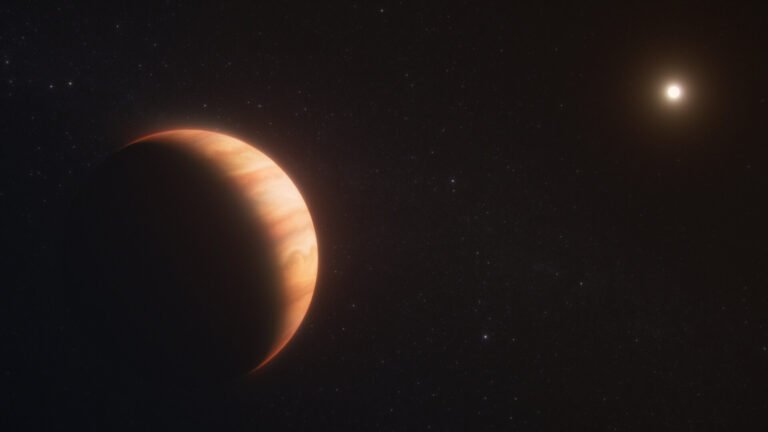
Science & Exploration 01/07/2026 16 views 2 likes An international team of astronomers has used the NASA/ESA/CSA James Webb Space Telescope to watch the Jupiter-sized exoplanet WD 1856 b transit its host star, measuring the planet’s mass and temperature and even detecting its atmosphere. They found that the planet is significantly warmer than expected and…