Artículos en español
Una colección de artículos sobre investigación planetaria y exploración espacial en español.
Una colección de artículos sobre investigación planetaria y exploración espacial en español.

Una colección de artículos sobre investigación planetaria y exploración espacial en español.
Una colección de artículos sobre investigación planetaria y exploración espacial en español.

Back to Article List The Wizard Nebula is a dim gas cloud surrounding a bright cluster of young stars, located within the bounds of Cepheus the King. The Wizard Nebula is a gas cloud surrounding a young cluster of stars; the former may only be visible in astrophotos, but the latter is easy to find…
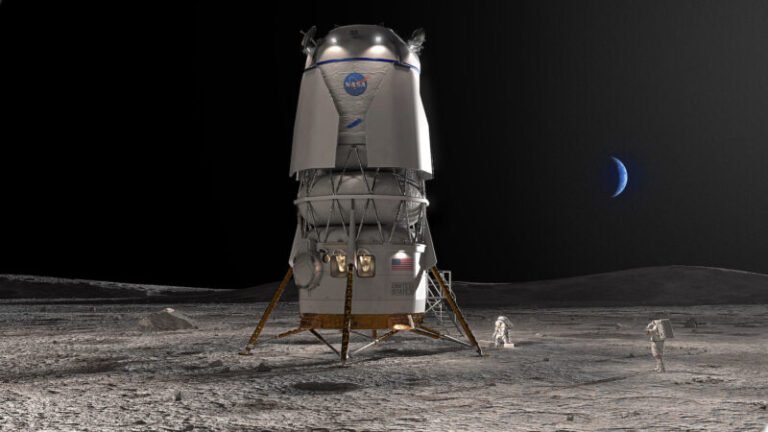
The Blue Moon Mark 2 lander is currently scheduled to make its debut in 2030, but with some modifications to its supporting infrastructure, it could potentially be ready at an earlier date. Credit: Blue Origin. In the spaceflight community, it can be fashionable to support one company or agency at the expense of others. Even well-known…

Back to Article List Today in the history of astronomy, an asteroid flattens 830 square miles of Siberian forest. The Tunguska impact flattened hundreds of miles of forest and devastated local wildlife, but the remoteness of the region kept it from being a mass casuality event. Credit: Leonid Kulik/Wikimedia An enormous explosion occurred approximately 3…
Introduction: In this article, I’ll delve into the captivating realm of exoplanetary exploration and its profound significance within the realm of astronomy. Over the past few decades, the discovery and study of exoplanets—planets outside our solar system—have revolutionized our understanding of the cosmos. These distant worlds, often dramatically different from those within our solar…

Swirls of wildfire smoke can be seen over Canada. (Image credit: NASA) Wildfires across the globe can be seen all the way from space. And one unexpected tool has come in handy to spot plumes of wildfire smoke: a satellite designed to study Earth’s oceans. What is it? In this photo, we can see swirls…

This image by ESA’s (European Space Agency) Euclid (with color added using ground-based images) provides an earlier snapshot of a region of our galaxy that NASA’s Nancy Grace Roman Space Telescope will repeatedly observe during the upcoming years. Image Credit: ESA/Euclid/Euclid Consortium/NASA, CFHT, image processing by J.-C. Cuillandre and E. Bertin (CEA Paris-Saclay) Read More…