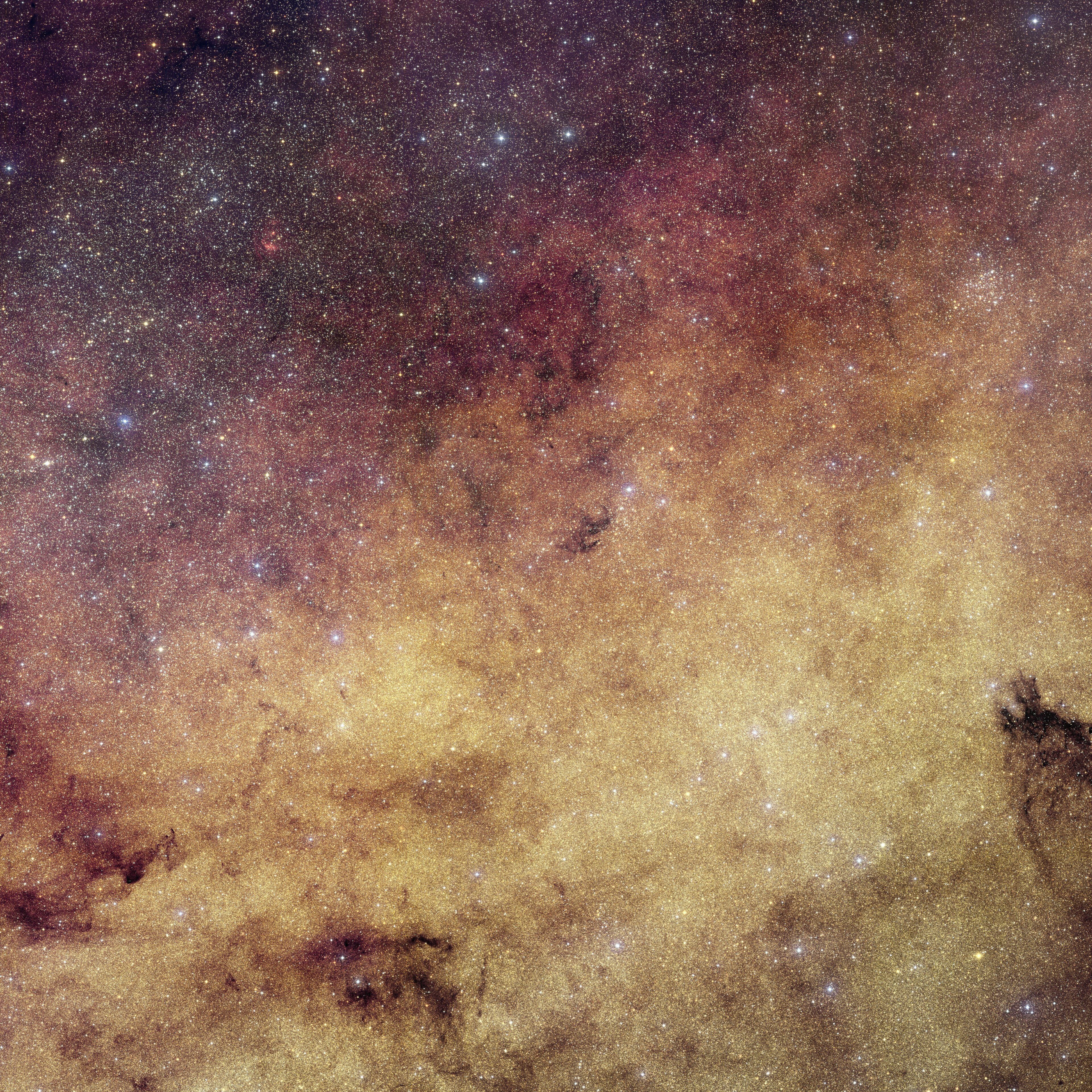
This image by ESA’s (European Space Agency) Euclid (with color added using ground-based images) provides an earlier snapshot of a region of our galaxy that NASA’s Nancy Grace Roman Space Telescope will repeatedly observe during the upcoming years.
Image Credit: ESA/Euclid/Euclid Consortium/NASA, CFHT, image processing by J.-C. Cuillandre and E. Bertin (CEA Paris-Saclay)
An image of the 2024 total solar eclipse Allexxandar/Alamy On 12 August, a total solar eclipse will sweep across parts of Europe and the Atlantic ocean as the moon passes between Earth and the sun, blocking out sunlight. Parts of the US and Africa, along with the entire UK and much of Europe and Canada,…
Blue Origin has started rebuilding the launch pad damaged by an explosive accident last month, but the company is working from a very different blueprint this time around. The company’s huge New Glenn rocket exploded on May 28 during a routine engine test at Launch Complex 36A (LC-36A) at Florida’s Cape Canaveral Space Force Station….
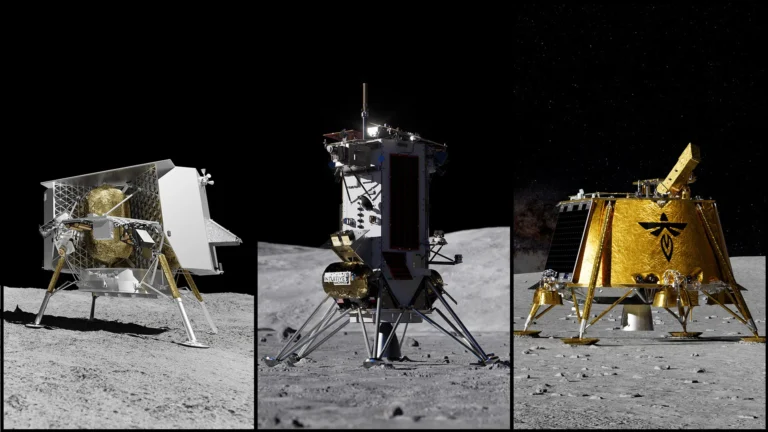
Three new contracts are going to companies that will be building a series of lunar landers. From left to right: Astrobotic’s Griffin lander, Intuitive Machines’ Nova-C, and Firefly Aerospace’s Blue Ghost. Astrobotic / Firefly / Intuitive Machines On June 30th, NASA announced additional details about its new plans for the Moon. The agency announced new…
On 26th June, satellite data was published that confirmed damage to key facilities at Russia’s Vladimir Space Communications Center. The exposure and extent of the harm were documented through imagery shared by the Exilenova+ community, and appeared to confirm the Ukrainian General Staff’s report of a 22nd June strike. A central point of impact was…
A restless Earth-facing sunspot unleashed a powerful X-class solar flare on June 30, triggering radio blackouts across parts of North America. The X1.1 solar flare erupted from sunspot region AR4479, peaking at 4:50 p.m. EDT (2050 GMT) according to NOAA’s Space Weather Prediction Center. The intense burst of X-rays released during the eruption reached Earth…
The July full moon occurs at 10:36 a.m. EDT (1436 GMT) on July 29, when the lunar disk appears fully lit as it shines opposite the sun in Earth’s sky. The July full moon is often called the “Buck Moon“, to reflect the time of the year when young male deer grow out their antlers…





https://www.nasa.gov/image-detail/euclid-s-view-of-our-galaxy-s-bulge/